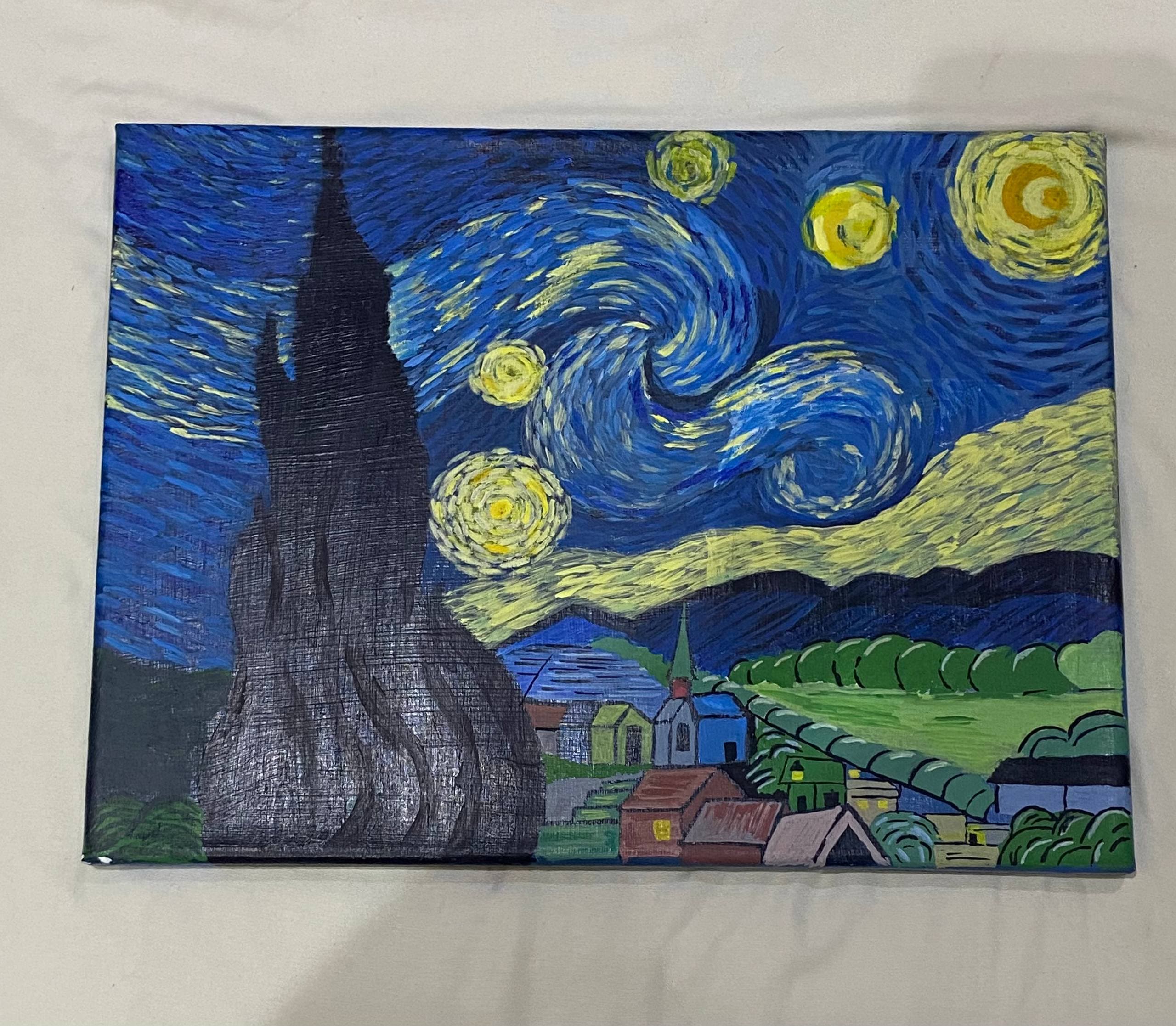
The Story of Van Gogh's Starry Night, and Why It Remains the Most Coveted
A night painted from a narrow window became the most famous sky in art. We trace its story, and reflect on why it remains the most requested piece for those seeking a work to keep.
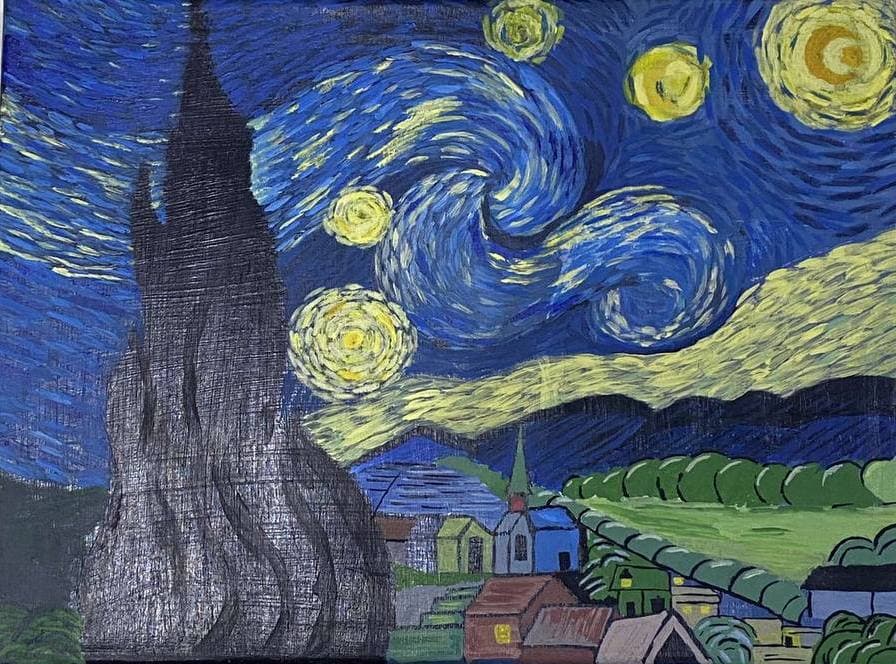
Few paintings step beyond museum walls to settle into collective memory. The Starry Night is one of them: a sky that turns as though alive, a village sleeping quietly beneath it. From Van Gogh's first stroke, the world has never stopped looking.
A night born at a window
In June 1889, Van Gogh was staying at the monastery of Saint-Rémy in southern France. From his window overlooking the hills, he painted what he saw before dawn, adding a village and a church spire from imagination. The work was never a faithful copy of the scene, but a translation of what he felt before the night: movement, vastness, a light that would not rest.
Why it holds the eye
The painting's secret lies in its calm tension. The sky ripples with eddies of blue and gold, while the cypress stands in the foreground like a dark flame joining earth to heaven. This contrast — turbulence above, stillness below — is what draws the eye back, again and again, without tiring.
When I have a terrible need of religion, I go out and paint the stars.
From canvas to wall
The Starry Night remains the most requested piece among those seeking a work that lends a space depth without noise. At Birisha it is rendered by hand on canvas, keeping the movement of the original and the warmth of its touch, arriving as a single piece that is never repeated. It is not a print to hang, but a work to keep, to gift, and to talk about.
Perhaps this is the essence of great paintings: they keep speaking more than a century on, and in every home they enter they find a new sky to look out from.